


en
en v
Phone
Cart0 Tickets
Total: 0
Account
Calendar
Search
Menu

The Exterminating Angel

VenueGran Teatre del Liceu
CalendarThu 15 Apr 2027 - Thu 22 Apr 2027
Synopsis/Details


The Exterminating Angel – Thomas Adès

Opera in 3 acts

Libretto by Tom Cairns in collaboration with Thomas Adès based on Luis Buñuel’s homonymous film (The Exterminating Angel, 1962).


'The Exterminating Angel' reminds us that what is truly sacrilegious is not blasphemy, but empty routine and self-complacency.

Luis Buñuel’s homonymous film becomes a quasi-mythical origin for The Exterminating Angel, the opera by Thomas Adès, a brilliant composer who will also conduct the performances at the Liceu. Adès transforms that unsettling universe into a fascinating sonic architecture: music filled with effects, unusual textures and subtle tensions that opens the doors to a ritual that slowly disintegrates.

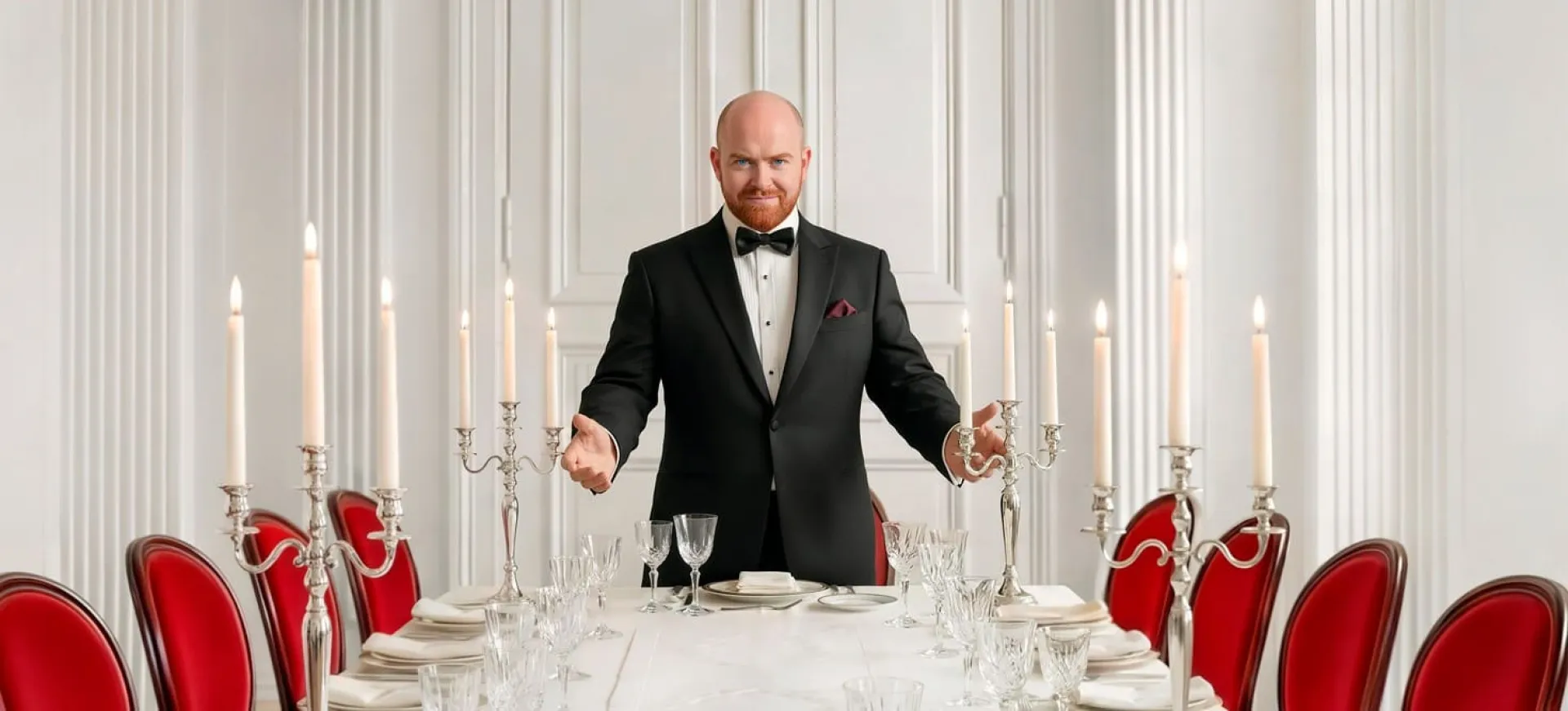
The acclaimed production by Calixto Bieito for the Opéra national de Paris places the audience in a bourgeois and seemingly civilized space: an aristocratic salon that, after a refined dinner, reveals the fragility of its rituals. Where there should be meaning there is only repetition; where there should be freedom, an asphyxiating inertia accumulates. It is in this gap that the exterminating angel emerges: an invisible force that fractures order and exposes the sacrilegious nature of a society that has forgotten the true meaning of the sacred.


The guests, unable to leave the room, witness the dissolution of language, hierarchies and bonds. Elegance turns into animality; the salon into a corrupted altar in which desire and fear displace all etiquette. Adès’s music, full of surprising sonic gestures, amplifies the drama to its limit: a failed ritual, a liturgy disturbed by human self-sufficiency.

In Bieito’s vision there is also an underlying idea of redemption: when the guests accept their vulnerability and repeat the gesture that condemned them, the space dissolves and, with it, the trap. Freedom does not arrive by force, but through surrender. Only when the group embraces its fragility does the door finally open.

The Exterminating Angel imposes no moral; it offers a wound. It reminds us that what is truly sacrilegious is not blasphemy, but empty routine and self-complacency. And that only art, in its capacity to unsettle, can reopen the door to the sacred.

  • 🕒 Running time
    • approximately 2 hours 15 minutes
Cast

Lucia de Nobile: Jacqueline Stucker

Leticia Meynar: Gloria Tronel 

Leonora Palma: Hilary Summers

Silvia de Avila: Claudia Boyle 

Blanca Delgado: Christine Rice 

Beatriz: Ilanah Lobel-Torres

Edmundo de Nobile: Nicky Spence 

Raúl Yebenes

Colonel Álvaro Gómez: Jarrett Ott

Francisco de Avila: Anthony Roth Costanzo

Eduardo: Josh Lovell

Señor Russell: Philippe Sly 

Alberto Roc: Paul Gay 

Julio: Thomas Faulkner 

Lucas: Caspar Singh

Enrique: Marc Sala 

Pablo: Carlos Reynoso 

Meni: Oihane González

Camila: Marcelina Román

Padre Sansón: Régis Mengus 


Stage direction - Calixto Bieito

Set design - Anna-Sofia Kirsch

Costume design - Ingo Krügler

Lighting design - Reinhard Traub

Production - Gran Teatre del Liceu, based on the production of the Opéra national de Paris

Chorus of the Gran Teatre del Liceu - Director Pablo Assante

Symphony Orchestra of the Gran Teatre del Liceu - Conductor Thomas Adès

Venue
Gran Teatre del Liceu

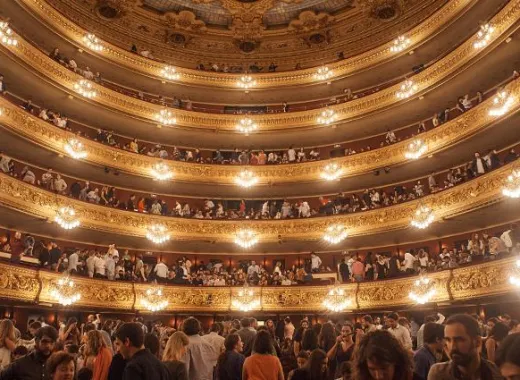
Barcelona's opera house, the Gran Teatre del Liceu, was founded on the Rambla in 1847 and has continued over the years to fulfil its role as a culture and arts centre and one of the symbols of the city.

Today it is publicly-owned (by the Government of Catalonia, Barcelona City Council, Barcelona Provincial Council and the Ministerio de Educación, Cultura y Deporte) and administered by the Fundació del Gran Teatre del Liceu which, in addition to the aforementioned bodies, incorporates the Patronage Council and the Societat del Gran Teatre del Liceu (the old society of owners).
 

Origins: From 1837 to 1847

The Liceu evolved out of the Sociedad Dramática de Aficionados (Society of theatre-lovers) set up in 1837 at the instigation of Manuel Gibert in the former convent of Montsió by members of the National Militia, an organization of armed citizens with liberal leanings.
Barcelona's economy and population were growing fast at the time and the city needed a music conservatory. This led to the conversion of the Sociedad Dramática into the Liceo Filármonico Dramático Barcelonés de S.M. la Reina Isabel II (Barcelona Dramatic and Philharmonic Lyceum of HM Queen Isabel II).  In addition to its theatrical activities, the new organization cultivated Italian-style singing and music.
 

The building on the Rambla

The original building was solemnly opened on 4 April 1847. The plans had been drawn up by Miquel Garriga i Roca, subsequently assisted by Josep Oriol Mestres. The project was funded by selling shares, which meant that many of the boxes and seats were to be privately owned. The shareholders formed the Societat del Gran Teatre del Liceu, known as the “Societat de Propietaris” (Society of Owners),  which was in sole charge of running the Gran Teatre del Liceu from 1855 onwards, after it was legally separated from the Conservatori del Gran Teatre del Liceu.
The theatre was operated by impresarios who were given a concession to stage a specific number of productions in exchange for the proceeds from the sale of tickets not reserved for the Societat itself. This system was to endure until 1980.
 

The creation of the Consortium

By the last quarter of the 20th century this management system was no longer viable. In 1980, to avert the danger of the disappearance of an institution of such worldwide cultural renown, the Generalitat  Catalonia's first government in modern times – set up a consortium, the Consorci del Gran Teatre del Liceu, which also incorporated Barcelona City Council and the Societat del Gran Teatre del Liceu. Barcelona Provincial Council joined the Consortium in 1985, followed by the Spanish Ministry of Culture in 1986. From then on the Consortium took over operation of the theatre.


Accomodation

Buy now

Gift vouchers

Gift someone an unforgettable night at the opera.
Choose a gift coupon and let them pick the performance they love—music, drama, and world-class artistry, all in one elegant experience.
Barcelona Opera Tickets
Facebook
Payment
© 2026 RM EUROPA TICKET GmbH
Whatsapp