


en
en v
Phone
Cart0 Tickets
Total: 0
Account
Calendar
Search
Menu

The Capulets and the Montagues

VenueGran Teatre del Liceu
CalendarFri 30 Oct 2026 - Sun 22 Nov 2026
Synopsis/Details


I Capuleti e i Montecchi – Vincenzo  Bellini 

Lyric tragedy in two acts

Libretto by Felice Romani


A renewed take on the myth of Romeo and Juliet that turns love into an almost sacrilegious gesture in a world marked by pride and violence

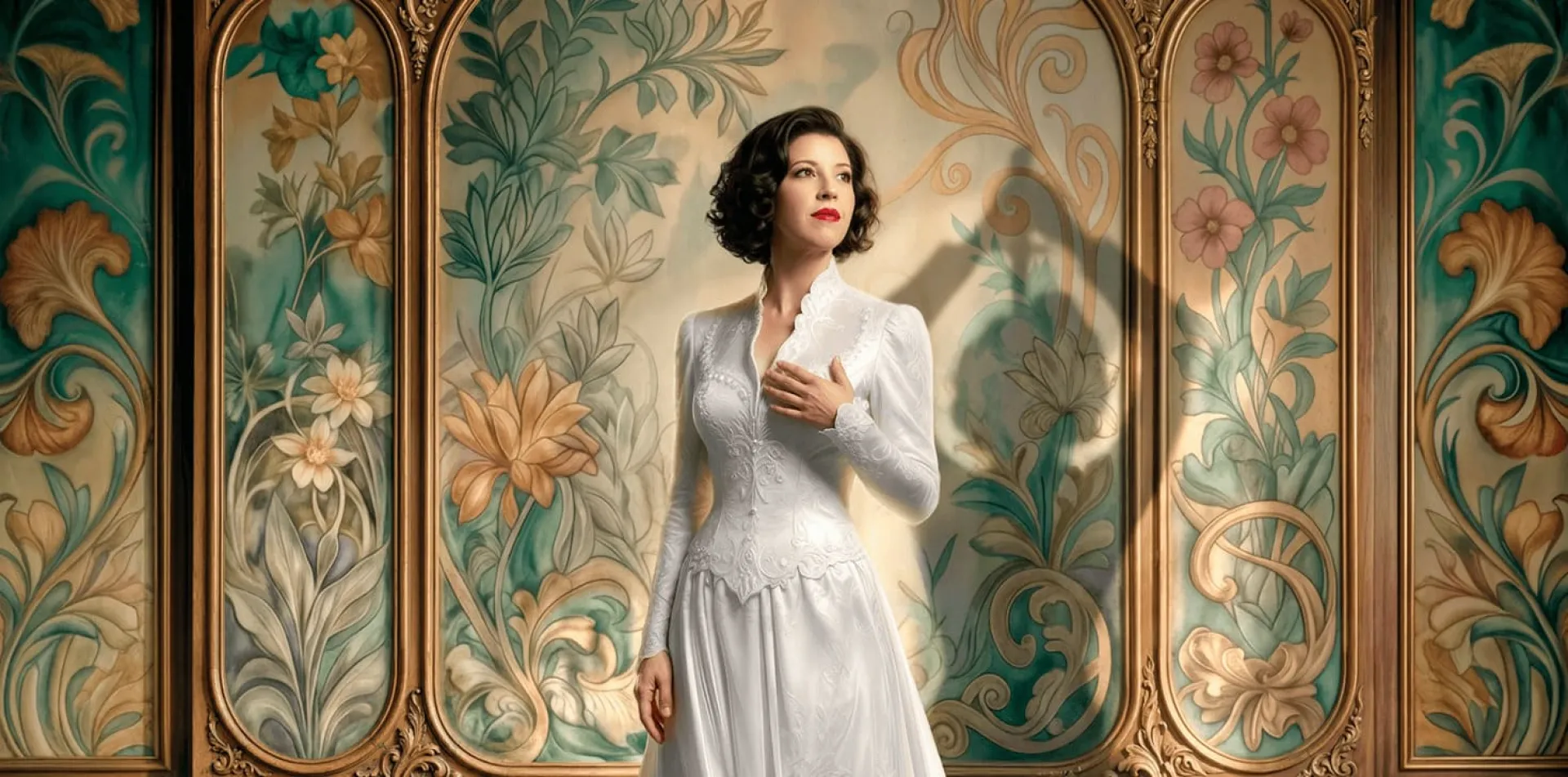
With I Capuleti e i Montecchi, Bellini offers a renewed perspective on the myth of Romeo and Juliet and turns love into an almost sacrilegious gesture in a world marked by pride and violence. Adrian Noble’s production for La Scala in Milan arrives at the Liceu with musical direction by Riccardo Frizza and the voices of Lisette Oropesa and Raffaella Lupinacci, two leading figures in today’s bel canto.

The opera moves away from Shakespearean romanticism and is rooted in the Italian tradition of factional conflict, where hatred is a destiny rather than a circumstance. In this tense setting, the secret love between Giulietta and Romeo becomes a force that defies social norms. For those around them, loving each other is almost an offense, a fracture in the established order. Love is sacred because it is free, and it is perceived as sacrilegious because it calls into question the values that uphold family honor.


Bellini transforms this clash into music that breathes with delicacy. His long, ethereal melodies seem to want to suspend time, as if trying to protect the lovers from a world that condemns them before hearing them. This intimate sonority turns the drama into a reflection on vulnerability, resistance, and the desire to find truth amid chaos.

The ending, marked by the suicide of the two young lovers, takes on a ritual sense: a final act of fidelity that the world has failed to understand. Death thus becomes a space of ultimate union, where life has denied them the possibility of loving each other in freedom.

I Capuleti e i Montecchi: a stage prayer in which love seeks its own silence amid the noise of conflict.

  • 🕒 Running time
    • approximately 2 hours 50 minutes
Cast

Capellio: Marko Mimica 

Giulietta: Lisette Oropesa (30 October and 2, 5, 8 and 11 November)

Giulietta: Marina Monzó (7 and 10 November)

Romeo: Raffaella Lupinacci (30 October and 2, 5, 8 and 11 November)

Romeo: Caterina Piva (7 and 10 November)

Tebaldo: Iván Ayón-Rivas (30 October and 2, 5, 8 and 11 November)

Tebaldo: Omar Mancini (7 and 10 November)

Lorenzo: Alejandro López


Stage direction - Adrian Noble

Set design - Tobias Hoheisel

Choreography - Joanne Pearce

Costume design - Petra Reinhardt

Lighting - Jean Kalman and Marco Filibeck

Production - Teatro alla Scala in Milan

Chorus of the Gran Teatre del Liceu - Director Pablo Assante

Orchestra of the Gran Teatre del Liceu - Conductor Riccardo Frizza and Sasha Yankevych (10 November)

Venue
Gran Teatre del Liceu

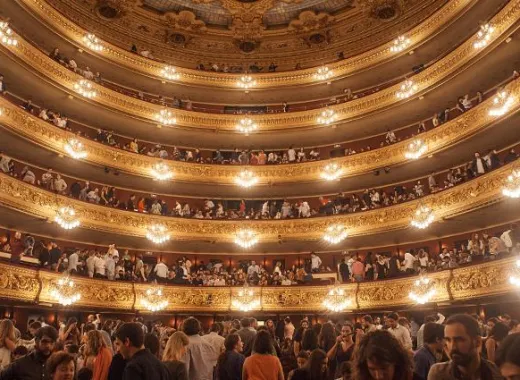
Barcelona's opera house, the Gran Teatre del Liceu, was founded on the Rambla in 1847 and has continued over the years to fulfil its role as a culture and arts centre and one of the symbols of the city.

Today it is publicly-owned (by the Government of Catalonia, Barcelona City Council, Barcelona Provincial Council and the Ministerio de Educación, Cultura y Deporte) and administered by the Fundació del Gran Teatre del Liceu which, in addition to the aforementioned bodies, incorporates the Patronage Council and the Societat del Gran Teatre del Liceu (the old society of owners).
 

Origins: From 1837 to 1847

The Liceu evolved out of the Sociedad Dramática de Aficionados (Society of theatre-lovers) set up in 1837 at the instigation of Manuel Gibert in the former convent of Montsió by members of the National Militia, an organization of armed citizens with liberal leanings.
Barcelona's economy and population were growing fast at the time and the city needed a music conservatory. This led to the conversion of the Sociedad Dramática into the Liceo Filármonico Dramático Barcelonés de S.M. la Reina Isabel II (Barcelona Dramatic and Philharmonic Lyceum of HM Queen Isabel II).  In addition to its theatrical activities, the new organization cultivated Italian-style singing and music.
 

The building on the Rambla

The original building was solemnly opened on 4 April 1847. The plans had been drawn up by Miquel Garriga i Roca, subsequently assisted by Josep Oriol Mestres. The project was funded by selling shares, which meant that many of the boxes and seats were to be privately owned. The shareholders formed the Societat del Gran Teatre del Liceu, known as the “Societat de Propietaris” (Society of Owners),  which was in sole charge of running the Gran Teatre del Liceu from 1855 onwards, after it was legally separated from the Conservatori del Gran Teatre del Liceu.
The theatre was operated by impresarios who were given a concession to stage a specific number of productions in exchange for the proceeds from the sale of tickets not reserved for the Societat itself. This system was to endure until 1980.
 

The creation of the Consortium

By the last quarter of the 20th century this management system was no longer viable. In 1980, to avert the danger of the disappearance of an institution of such worldwide cultural renown, the Generalitat  Catalonia's first government in modern times – set up a consortium, the Consorci del Gran Teatre del Liceu, which also incorporated Barcelona City Council and the Societat del Gran Teatre del Liceu. Barcelona Provincial Council joined the Consortium in 1985, followed by the Spanish Ministry of Culture in 1986. From then on the Consortium took over operation of the theatre.


Accomodation

Buy now

Gift vouchers

Gift someone an unforgettable night at the opera.
Choose a gift coupon and let them pick the performance they love—music, drama, and world-class artistry, all in one elegant experience.
Barcelona Opera Tickets
Facebook
Payment
© 2026 RM EUROPA TICKET GmbH
Whatsapp