


en
en v
Phone
Cart0 Tickets
Total: 0
Account
Calendar
Search
Menu

Jenufa

VenueGran Teatre del Liceu
CalendarSat 08 May 2027 - Sat 22 May 2027
Synopsis/Details

Jenůfa – Leoš Janáček

Opera in three acts

Libretto by Leoš Janáček based on Jeji pastorkyna by Gabriela Preissová


The opera reveals itself as a spiritual tragedy where compassion overcomes dogma and grace is born from despair

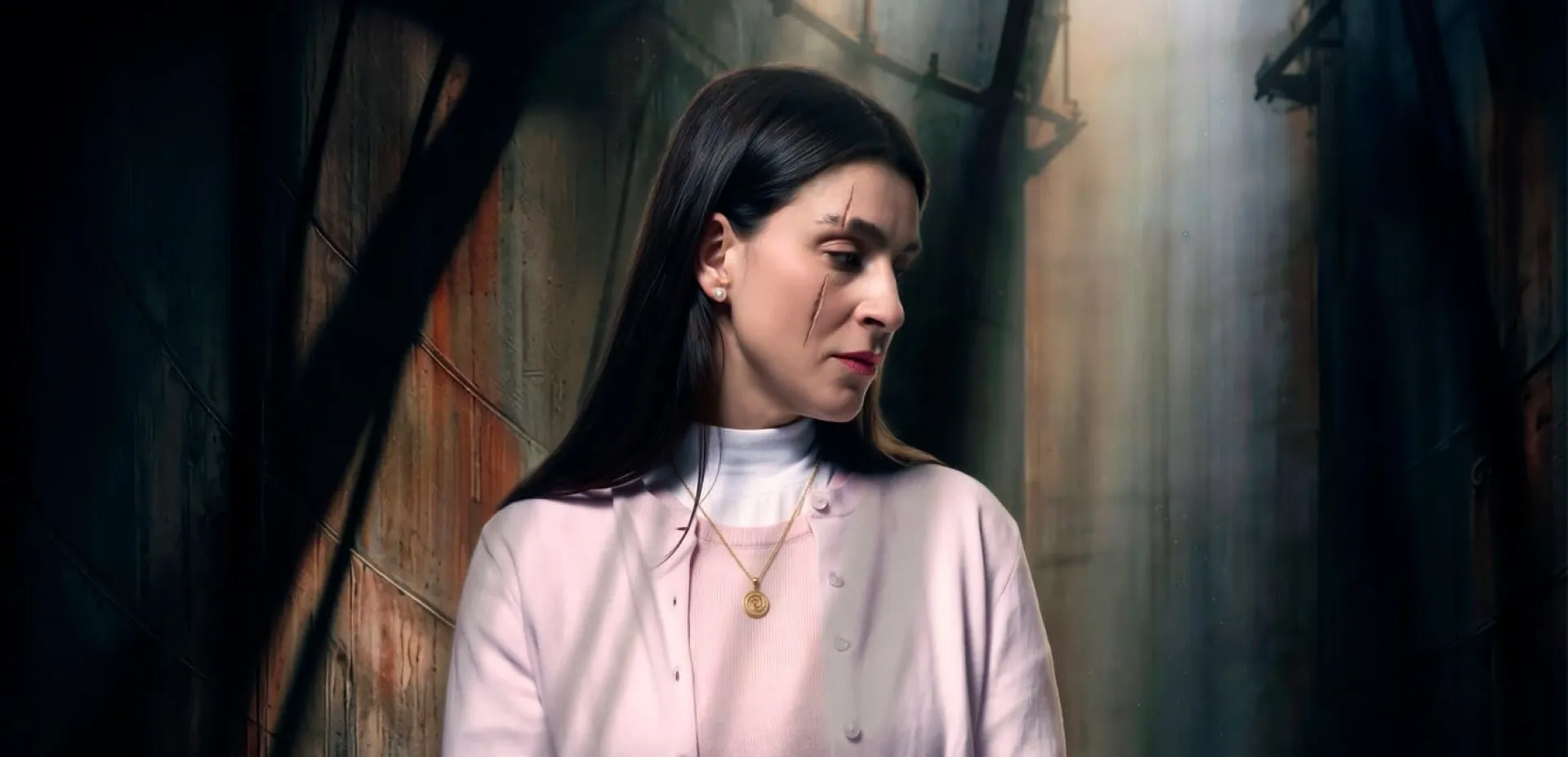
Jenůfa, by Leoš Janáček, floods the Liceu with overwhelming emotional power in Àlex Ollé’s new and exceptional production, with the ever-revealing conducting of Jonathan Nott and a luxury cast led by Asmik Grigorian and Nina Stemme.

Inspired by the harshness of rural life and the stern morality of a closed community, Jenůfa becomes a modern passion in which the sacred and the sacrilegious intertwine in an unsettling dance of devastating consequences.

At the heart of the drama beat two female figures in constant tension: Jenůfa, wounded by love and shame, and the Kostelnička, her stepmother, both moral beacon and author of a crime that changes everything. Jenůfa embodies profaned innocence that, despite the pain, remains sacred; The Kostelnička, on the other hand, represents the paroxysm of a law without compassion: the strict voice of community and religion.


His act —the murder of Jenůfa’s illegitimate child— is the sacrilegious gesture par excellence: not only because it is a crime, but because it is carried out in the name of a distorted love, an imposed honour, a perverted sense of the sacred. She kills to save, lies to protect, drowns one life to “redeem” another. Thus, the opera becomes a brutally contemporary parable: how far can moral fanaticism go? Can a forced sacrifice justify the destruction of innocence?

Janáček, with music that is direct, lyrical and spiritual to the limit, writes this drama with an intensity that pierces all defences. The vocal writing gives a tragic truth to the characters, while the orchestra delves into their deepest thoughts and anguish.

And yet, Jenůfa is also a work about forgiveness. When the protagonist forgives the Kostelnička, the opera reveals itself as a great spiritual tragedy in which compassion overcomes dogma and grace blossoms where only despair seemed possible.

  • 🕒 Running time
    • approximately 2 hours 35 minutes
Cast

Grandmother Buryjovka: Marta Infante

Laca Klemen: Pavel Černoch

Števa Buryja: James Ley

Kostelnička Buryjovka: Nina Stemme

Jenůfa: Asmik Grigorian 

The mill foreman: Guillem Batllori (8, 14 and 20 May)

The mill foreman: Nojus Zalys (11, 16 and 22 May)

The mayor: Christopher Robertson

The mayor’s wife: Laura Vila

Karolka: Rosa Maria Abella

A shepherdess: Olga Szabo

A shepherdess: Mariel Aguilar

Barena: Alexandra Zabala

Barena: Mariel Fontes

Jano: Ruth González

Aunt: Elisabeth Gillming

Aunt: Cristina Tena

Voice 1: Raquel Lucena

Voice 1: Helena Zaborowska

Voice 2: Dimitar Darlev

Voice 2: Alessandro Vandin


Stage direction: Àlex Ollé

Set design: Alfons Flores and Mar Flores

Costume design: Lluc Castells

Lighting design: Urs Schönebaum

Production: Gran Teatre del Liceu in co-production with the Teatro Real and ABAO Bilbao Opera

Choir of the Gran Teatre del Liceu: Director Pablo Assante

Symphony Orchestra of the Gran Teatre del Liceu: Conductor Jonathan Nott

Venue
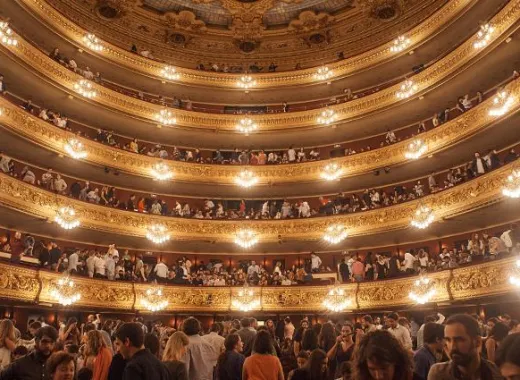
Gran Teatre del Liceu

Barcelona's opera house, the Gran Teatre del Liceu, was founded on the Rambla in 1847 and has continued over the years to fulfil its role as a culture and arts centre and one of the symbols of the city.

Today it is publicly-owned (by the Government of Catalonia, Barcelona City Council, Barcelona Provincial Council and the Ministerio de Educación, Cultura y Deporte) and administered by the Fundació del Gran Teatre del Liceu which, in addition to the aforementioned bodies, incorporates the Patronage Council and the Societat del Gran Teatre del Liceu (the old society of owners).
 

Origins: From 1837 to 1847

The Liceu evolved out of the Sociedad Dramática de Aficionados (Society of theatre-lovers) set up in 1837 at the instigation of Manuel Gibert in the former convent of Montsió by members of the National Militia, an organization of armed citizens with liberal leanings.
Barcelona's economy and population were growing fast at the time and the city needed a music conservatory. This led to the conversion of the Sociedad Dramática into the Liceo Filármonico Dramático Barcelonés de S.M. la Reina Isabel II (Barcelona Dramatic and Philharmonic Lyceum of HM Queen Isabel II).  In addition to its theatrical activities, the new organization cultivated Italian-style singing and music.
 

The building on the Rambla

The original building was solemnly opened on 4 April 1847. The plans had been drawn up by Miquel Garriga i Roca, subsequently assisted by Josep Oriol Mestres. The project was funded by selling shares, which meant that many of the boxes and seats were to be privately owned. The shareholders formed the Societat del Gran Teatre del Liceu, known as the “Societat de Propietaris” (Society of Owners),  which was in sole charge of running the Gran Teatre del Liceu from 1855 onwards, after it was legally separated from the Conservatori del Gran Teatre del Liceu.
The theatre was operated by impresarios who were given a concession to stage a specific number of productions in exchange for the proceeds from the sale of tickets not reserved for the Societat itself. This system was to endure until 1980.
 

The creation of the Consortium

By the last quarter of the 20th century this management system was no longer viable. In 1980, to avert the danger of the disappearance of an institution of such worldwide cultural renown, the Generalitat  Catalonia's first government in modern times – set up a consortium, the Consorci del Gran Teatre del Liceu, which also incorporated Barcelona City Council and the Societat del Gran Teatre del Liceu. Barcelona Provincial Council joined the Consortium in 1985, followed by the Spanish Ministry of Culture in 1986. From then on the Consortium took over operation of the theatre.


Accomodation

Buy now

Gift vouchers

Gift someone an unforgettable night at the opera.
Choose a gift coupon and let them pick the performance they love—music, drama, and world-class artistry, all in one elegant experience.
Barcelona Opera Tickets
Facebook
Payment
© 2026 RM EUROPA TICKET GmbH
Whatsapp