


en
en v
Phone
Cart0 Tickets
Total: 0
Account
Calendar
Search
Menu

Assembly Hall Dance

VenueGran Teatre del Liceu
CalendarThu 13 May 2027 - Wed 19 May 2027
Synopsis/Details

Assembly Hall – Kidd Pivot / Crystal Pite


An allegory about the sense of community between ordinary plot and heroic and comic fantasy

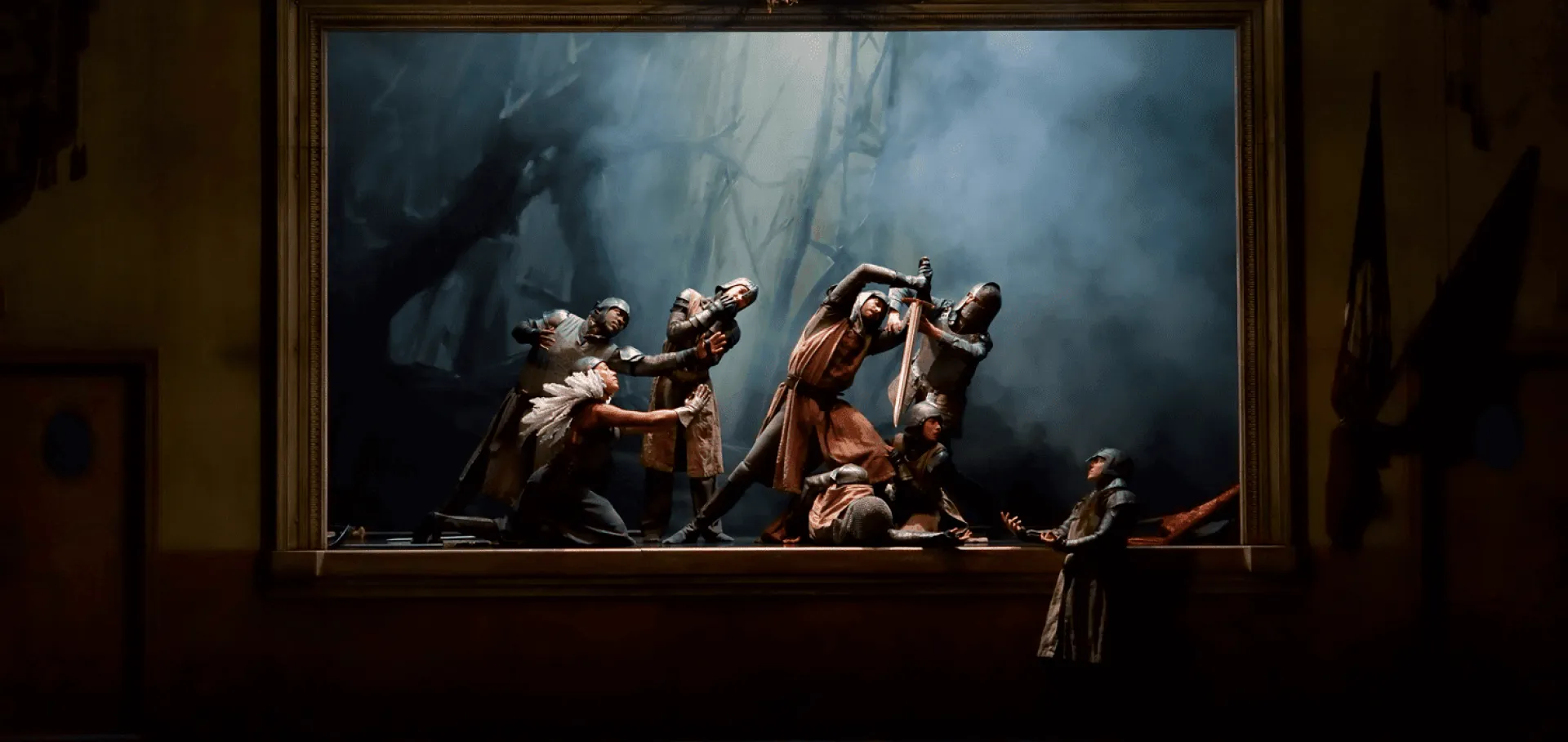
Assembly Hall, created by choreographer Crystal Pite and playwright Jonathon Young for their company Kidd Pivot, unfolds a distinctive allegory about the sense of community. The work takes place in a local assembly hall, where a group of enthusiasts who reenact medieval plays gathers for their annual meeting: the countdown is relentless, costs are rising, members are dwindling, and the assembly risks disappearing.

It is within this context that Pite weaves an intimate and mythical universe, flowing between ordinary plot and heroic and comic fantasy. The eight characters, performed by Kidd Pivot dancers, alternate between bureaucratic debate and fantastical embodiments: clad in armour, they become knights, maidens and legendary figures in a choreography that shifts between the present and an idealised past.


The use of text is unconventional: the voices we hear are dramatic recordings that the dancers synchronise with precise lip and body movements. This device creates a constant dialogue between word and gesture and, at the same time, brings dramatic richness and humour.

The set design, lighting and sound close this dual world with a subtle yet intense aesthetic. The stage design blends with the choreographic action to immerse the audience in a framework in which the administrative and the mythical worlds merge with grace and depth.

Assembly Hall is not only a comedy and a drama, but also a reflection on exclusion, hope, and the human need for belonging. Imagination becomes both refuge and weapon, and the purpose of these reenactors is revealed as a powerful metaphor for our desire to build and preserve community.

For Crystal Pite, movement is the secret memory of humanity. Her works have established her as one of the most innovative voices in contemporary dance, capable of articulating emotion and theatrical intelligence with hypnotic clarity. With a language that fuses precision, theatricality and an overflowing imagination, Pite redefines the narrative limits of the body. Her career has made Kidd Pivot an essential reference of our time.

Cast

Direction and choreography - Crystal Pite

Direction and dramaturgy - Jonathon Young

Composition and sound - Owen Belton, Alessandro Juliani and Meg Roe

Set design - Jay Gower Taylor

Costume design - Nancy Bryant

Lighting design - Tom Visser

Video - Cybèle Young

Co-production - Edinburgh International Festival, Sadler’s Wells, Théâtre de la Ville, Centro Servizi Culturali Santa Chiara, National Arts Centre, Seattle Theatre Group, Canadian Stage, DanceHouse, Danse Danse, Le Diamant, Electric Company Theatre

Venue
Gran Teatre del Liceu

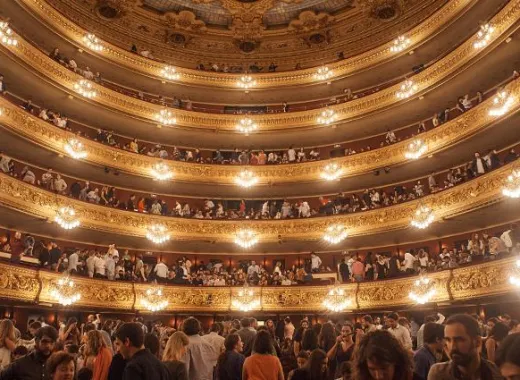
Barcelona's opera house, the Gran Teatre del Liceu, was founded on the Rambla in 1847 and has continued over the years to fulfil its role as a culture and arts centre and one of the symbols of the city.

Today it is publicly-owned (by the Government of Catalonia, Barcelona City Council, Barcelona Provincial Council and the Ministerio de Educación, Cultura y Deporte) and administered by the Fundació del Gran Teatre del Liceu which, in addition to the aforementioned bodies, incorporates the Patronage Council and the Societat del Gran Teatre del Liceu (the old society of owners).
 

Origins: From 1837 to 1847

The Liceu evolved out of the Sociedad Dramática de Aficionados (Society of theatre-lovers) set up in 1837 at the instigation of Manuel Gibert in the former convent of Montsió by members of the National Militia, an organization of armed citizens with liberal leanings.
Barcelona's economy and population were growing fast at the time and the city needed a music conservatory. This led to the conversion of the Sociedad Dramática into the Liceo Filármonico Dramático Barcelonés de S.M. la Reina Isabel II (Barcelona Dramatic and Philharmonic Lyceum of HM Queen Isabel II).  In addition to its theatrical activities, the new organization cultivated Italian-style singing and music.
 

The building on the Rambla

The original building was solemnly opened on 4 April 1847. The plans had been drawn up by Miquel Garriga i Roca, subsequently assisted by Josep Oriol Mestres. The project was funded by selling shares, which meant that many of the boxes and seats were to be privately owned. The shareholders formed the Societat del Gran Teatre del Liceu, known as the “Societat de Propietaris” (Society of Owners),  which was in sole charge of running the Gran Teatre del Liceu from 1855 onwards, after it was legally separated from the Conservatori del Gran Teatre del Liceu.
The theatre was operated by impresarios who were given a concession to stage a specific number of productions in exchange for the proceeds from the sale of tickets not reserved for the Societat itself. This system was to endure until 1980.
 

The creation of the Consortium

By the last quarter of the 20th century this management system was no longer viable. In 1980, to avert the danger of the disappearance of an institution of such worldwide cultural renown, the Generalitat  Catalonia's first government in modern times – set up a consortium, the Consorci del Gran Teatre del Liceu, which also incorporated Barcelona City Council and the Societat del Gran Teatre del Liceu. Barcelona Provincial Council joined the Consortium in 1985, followed by the Spanish Ministry of Culture in 1986. From then on the Consortium took over operation of the theatre.


Accomodation

Buy now

Gift vouchers

Gift someone an unforgettable night at the opera.
Choose a gift coupon and let them pick the performance they love—music, drama, and world-class artistry, all in one elegant experience.
Barcelona Opera Tickets
Facebook
Payment
© 2026 RM EUROPA TICKET GmbH
Whatsapp