


en
en v
Phone
Cart0 Tickets
Total: 0
Account
Calendar
Search
Menu

Aida

VenueGran Teatre del Liceu
CalendarFri 25 Sep 2026 - Sun 25 Oct 2026
Synopsis/Details


Aida – Giuseppe Verdi 

Opera in four acts 

Libretto by Antonio Ghislanzoni  


A visual ritual in which beauty and conflict are in constant dialogue

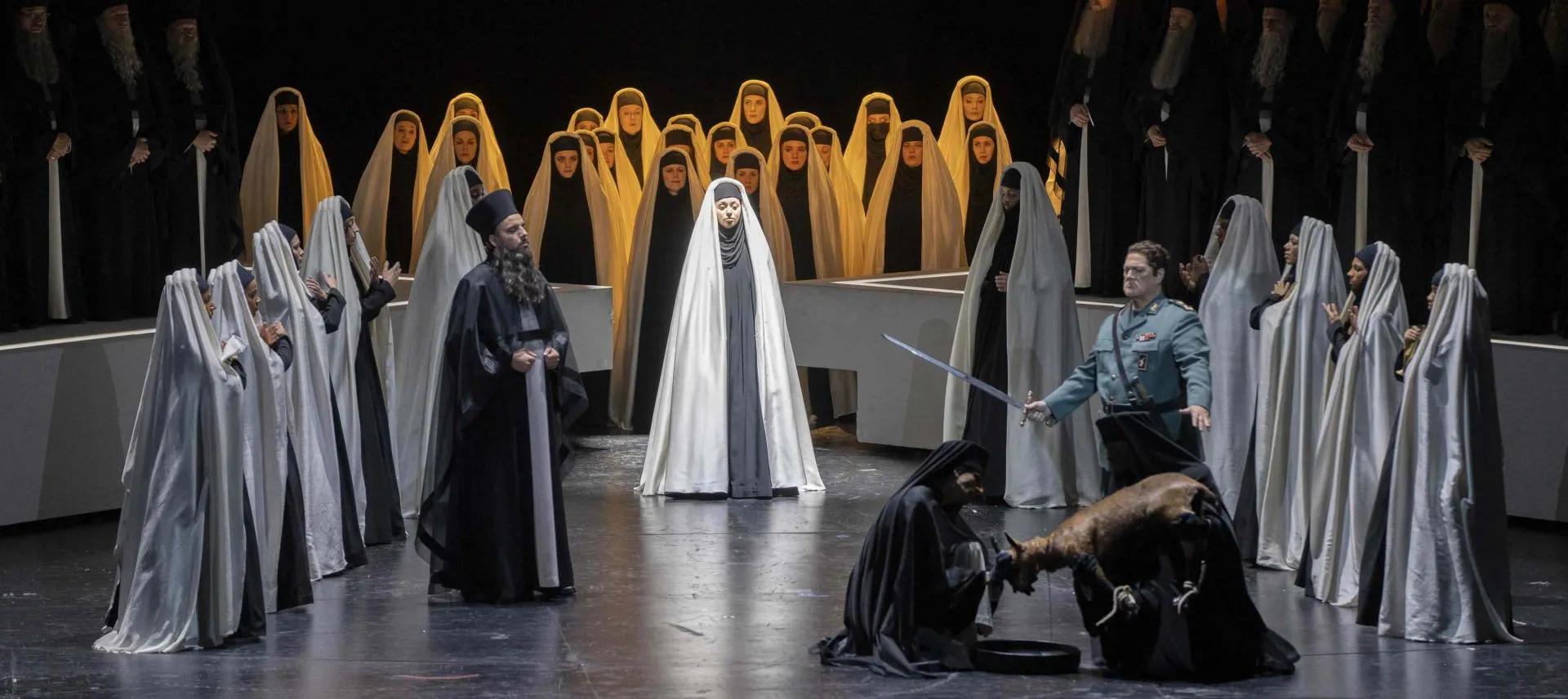
Liceu opens the season with an exceptional cast led by Anna Netrebko and Anna Pirozzi in the role of Aida, together with Yusif Eyvazov and Piotr Beczała as Radamès. A luxurious opening to bring to life one of Verdi’s most monumental operas, presented in a striking production by the Iranian artist Shirin Neshat, who transforms Aida into “a visual ritual in which beauty and conflict are in constant dialogue”.

This production, originally created for the Salzburg Festival, avoids the usual grandiloquence and places Verdi’s drama in a universe of great symbolic force. Neshat, with her poetic and committed vision, transforms Aida into a story that engages with contemporary tensions: identity, exile, oppression and the fragility of power. The opera thus becomes a mirror of the present, in which aesthetics combine with a subtle yet piercing political reading.


Often interpreted as a love story set in an idealised Egypt, Aida reveals a deeper conflict: the collision between the sacred and established power. Aida, an enslaved Ethiopian princess, and Radamès, an Egyptian hero, love each other in secret and challenge a system that condemns love as dissent. Their story, doomed from the beginning, exposes a rigid structure in which law and religion are confused in order to justify repression.

Neshat’s stage interpretation intensifies this tension with a visual beauty that does not renounce criticism. In the final tomb, Aida and Radamès find one last space of freedom: death becomes redemption, an act of emotional and spiritual liberation that transcends the violence surrounding them.

With the musical direction of Antonello Manacorda, and with Ekaterina Semenchuk and Ksenia Dudnikova as Amneris, as well as Artur Ruciński and Igor Golovatenko in the role of Amonasro, this Aida opens the Liceu season as a great total spectacle: emotion, reflection and a visual force that invites the audience to experience opera as a ritual and contemporary experience.

  • 🕒 Running time
    • approximately 4 hours
Cast

The King: Riccardo Fassi (25, 28 September, 1, 4 and 7 October)

The King: George Andguladze (27 September and 2, 6, 9, 13 and 15 October)

The King: Manuel Fuentes (23 and 29 September and 3, 8, 11 and 14 October)

Amneris: Ekaterina Semenchuk (25, 28 September, 1, 4 and 7 October)

Amneris: Ksenia Dudnikova (27 September and 2, 6, 9, 13 and 15 October)

Amneris: Fiorenza Cedolins (23 and 29 September and 3, 8, 11 and 14 October)

Aida: Anna Netrebko (25, 28 September, 1 and 4 October)

Aida: Anna Pirozzi (27 September and 2, 6, 9, 13 and 15 October)

Aida: Olga Maslova (23 and 29 September and 3, 8, 11 and 14 October)

Aida: Ewa Plonka (7 October)

Radamès: Yusif Eyvazov (25, 28 September, 1, 4 and 7 October)

Radamès: Piotr Beczała (2, 6, 9, 13 and 15 October)

Radamès: Arsen Soghomonyan (23, 27 and 29 September and 3, 8, 11 and 14 October)

Ramfis: Alexander Köpeczi (25, 28 September, 1, 4 and 7 October)

Ramfis: Giorgi Manoshvili (27 September and 2, 6, 9, 13 and 15 October)

Ramfis: Simón Orfila (23 and 29 September and 3, 8, 11 and 14 October)

Amonasro: Artur Ruciński  (25, 28 September, 1, 4 and 7 October)

Amonasro: Igor Golovatenko (27 September and 2, 6, 9, 13 and 15 October)

Amonasro: Ariun Ganbaatar (23 and 29 September and 3, 8, 11 and 14 October)

Messenger: Moisés Marín

Priestess: Carmen Buendía (25 and 28 September and 1, 2, 4, 7, 9, 13 and 15 October)

Priestess: Núria Vilà (23 and 29 September and 3, 6, 8, 11 and 14 October)


Stage direction - Shirin Neshat

Set design - Christian Schmidt

Choreography - Dustin Klein

Costume design - Tatyana van Walsum

Lighting design - Felice Ross

Video - Peter Venus

Co-production - Opéra national de Paris and Gran Teatre del Liceu, based on the original production from the Salzburg Festival

Chorus of the Gran Teatre del Liceu - Conductor Pablo Assante

Symphony Orchestra of the Gran Teatre del Liceu - Conductor Antonello Manacorda and Josep Gil

Venue
Gran Teatre del Liceu

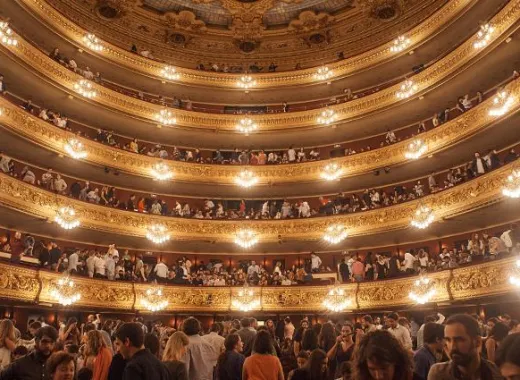
Barcelona's opera house, the Gran Teatre del Liceu, was founded on the Rambla in 1847 and has continued over the years to fulfil its role as a culture and arts centre and one of the symbols of the city.

Today it is publicly-owned (by the Government of Catalonia, Barcelona City Council, Barcelona Provincial Council and the Ministerio de Educación, Cultura y Deporte) and administered by the Fundació del Gran Teatre del Liceu which, in addition to the aforementioned bodies, incorporates the Patronage Council and the Societat del Gran Teatre del Liceu (the old society of owners).
 

Origins: From 1837 to 1847

The Liceu evolved out of the Sociedad Dramática de Aficionados (Society of theatre-lovers) set up in 1837 at the instigation of Manuel Gibert in the former convent of Montsió by members of the National Militia, an organization of armed citizens with liberal leanings.
Barcelona's economy and population were growing fast at the time and the city needed a music conservatory. This led to the conversion of the Sociedad Dramática into the Liceo Filármonico Dramático Barcelonés de S.M. la Reina Isabel II (Barcelona Dramatic and Philharmonic Lyceum of HM Queen Isabel II).  In addition to its theatrical activities, the new organization cultivated Italian-style singing and music.
 

The building on the Rambla

The original building was solemnly opened on 4 April 1847. The plans had been drawn up by Miquel Garriga i Roca, subsequently assisted by Josep Oriol Mestres. The project was funded by selling shares, which meant that many of the boxes and seats were to be privately owned. The shareholders formed the Societat del Gran Teatre del Liceu, known as the “Societat de Propietaris” (Society of Owners),  which was in sole charge of running the Gran Teatre del Liceu from 1855 onwards, after it was legally separated from the Conservatori del Gran Teatre del Liceu.
The theatre was operated by impresarios who were given a concession to stage a specific number of productions in exchange for the proceeds from the sale of tickets not reserved for the Societat itself. This system was to endure until 1980.
 

The creation of the Consortium

By the last quarter of the 20th century this management system was no longer viable. In 1980, to avert the danger of the disappearance of an institution of such worldwide cultural renown, the Generalitat  Catalonia's first government in modern times – set up a consortium, the Consorci del Gran Teatre del Liceu, which also incorporated Barcelona City Council and the Societat del Gran Teatre del Liceu. Barcelona Provincial Council joined the Consortium in 1985, followed by the Spanish Ministry of Culture in 1986. From then on the Consortium took over operation of the theatre.


Accomodation

Buy now

Gift vouchers

Gift someone an unforgettable night at the opera.
Choose a gift coupon and let them pick the performance they love—music, drama, and world-class artistry, all in one elegant experience.
Barcelona Opera Tickets
Facebook
Payment
© 2026 RM EUROPA TICKET GmbH
Whatsapp